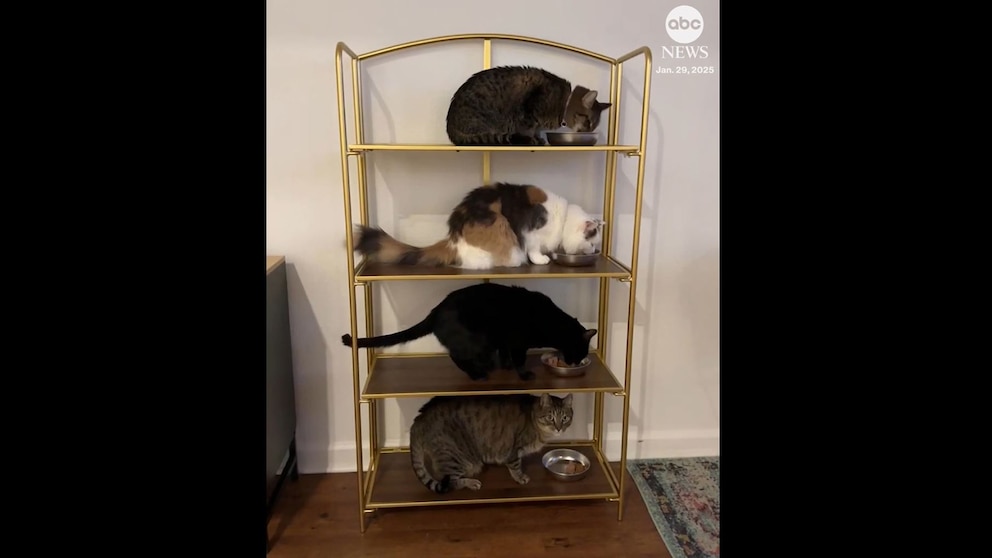
Feline Dining: A Journey to Structured Mealtime
In the world of cat ownership, one of the most delightful yet challenging aspects can be mealtime. For many cat owners, feeding their furry friends can turn into chaotic episodes, with cats darting around, jumping on counters, or begging at the table. However, one dedicated cat owner transformed this daily routine into a masterclass in training, teaching her four cats to dine peacefully on designated shelves. This fascinating journey not only highlights the techniques employed but also the challenges faced and the rewards reaped from such an endeavor.
The Initial Challenge of Mealtime Mayhem
For many cat owners, the dinner bell rings, and the house turns into a battleground. Cats, driven by instinct, often exhibit behaviors that can make mealtime challenging. This particular owner, Jane, found herself in a similar situation. With four cats, each with distinct personalities and feeding habits, mealtime was a frenzy. Cats would leap onto countertops, knock over dishes, and engage in playful skirmishes, making feeding time a source of stress rather than joy.
Recognizing the need for change, Jane embarked on a mission to reshape her cats’ behavior. The goal was simple yet ambitious: train each cat to eat from their designated shelves, creating a structured and calm mealtime environment.
Understanding Feline Behavior
Before diving into training techniques, Jane took the time to study feline behavior. Understanding the instincts and motivations behind her cats’ actions was crucial. Cats are naturally curious and territorial creatures. They thrive on routine and can become anxious when their environment is chaotic. By acknowledging these traits, Jane was able to devise a training plan that catered to her cats’ needs while addressing her own.
Creating a Designated Dining Area
The first step in Jane’s training regimen involved establishing a designated dining area. She chose specific shelves in her kitchen, which were both safe and easily accessible for her cats. This space would become their exclusive dining zone, free from distractions and disruptions. The shelves were equipped with individual feeding dishes, ensuring that each cat had its own allocated space.
Jane made sure to elevate the shelves slightly, as many cats prefer to eat in elevated positions. This not only catered to their natural instincts but also helped to prevent food aggression, a common issue among multiple cats.
Positive Reinforcement: The Key to Success
With the dining area in place, Jane turned her focus to training. She employed positive reinforcement techniques, which are widely recognized as effective methods for encouraging desired behaviors in animals. The process involved:
- Clicker Training: Jane used a clicker to mark the desired behavior moments. Whenever a cat approached the shelf or began eating from their dish, she would click and follow it up with a treat.
- Gradual Introduction: Initially, Jane placed the cats’ dishes on the floor and gradually moved them to the shelves, allowing the cats to adjust to the new dining arrangement.
- Consistency: Jane ensured that feeding times were consistent, which helped establish a routine. The cats began to associate the shelves with mealtime, reducing their inclination to jump around.
Throughout this process, Jane remained patient and attentive. Each cat had its own learning pace, and she recognized that some might take longer to adapt than others.
Overcoming Challenges
While the training journey was rewarding, it wasn’t without its hurdles. Some challenges Jane faced included:
- Resistance to Change: Initially, some cats resisted the new feeding location. They preferred the chaos of floor dining. Jane addressed this by placing their favorite treats on the shelves to entice them.
- Inter-Cat Rivalry: Competition for food can lead to aggressive behaviors. To manage this, Jane ensured that each cat had enough space and food, reducing the chances of conflict.
- Stubbornness: Cats can be notoriously stubborn. Jane learned to pick her battles, celebrating small victories and maintaining a positive environment.
Establishing a Routine
Over time, the cats began to adjust to their new dining arrangement. Jane introduced a consistent mealtime schedule, which proved crucial in reinforcing the training. Each day, the cats came to expect their meals on the shelves, transforming their behavior from chaotic to calm.
As they adapted, Jane noticed other positive changes in their behavior. The cats became more relaxed during meal times, and their interactions with each other improved significantly. No longer did they engage in food fights; instead, they enjoyed their meals in peace.
Celebrating Success and Lessons Learned
After several weeks of training, Jane’s efforts culminated in a harmonious mealtime experience. Each cat now confidently dined on their designated shelves, exhibiting calm behaviors and a newfound appreciation for their space. The transformation was profound, not only enhancing the quality of mealtime but also improving the overall atmosphere of her home.
Jane’s journey offered valuable insights into feline behavior and training techniques. She learned that patience, consistency, and understanding are key components when working with cats. Her experience serves as a testament to the idea that with dedication and creativity, even the wildest of felines can be trained to dine with decorum.
Conclusion: A Masterclass in Feline Dining
Jane’s journey illustrates how a dedicated cat owner can transform mealtime into a masterclass in training. By understanding feline behavior, creating a structured environment, and employing positive reinforcement, she successfully taught her four cats to dine on designated shelves. This experience not only reshaped her cats’ behavior but also enriched their lives, providing them with a sense of routine and security.
For cat owners facing similar challenges, Jane’s story serves as inspiration. With the right approach and a bit of creativity, mealtime can evolve from a source of stress into a delightful ritual, fostering a deeper bond between cats and their owners.
See more BuzzFeed Insider